To make the impossible possible. It’s not just for our customers that we like to do this, but also for people with spinal cord injuries. That’s why Salure is working together with Project MARCH by students on a – as far as we know – unique project worldwide. To make possible for these people what almost everyone around them can do, but they can’t: walk. Wherever they want.
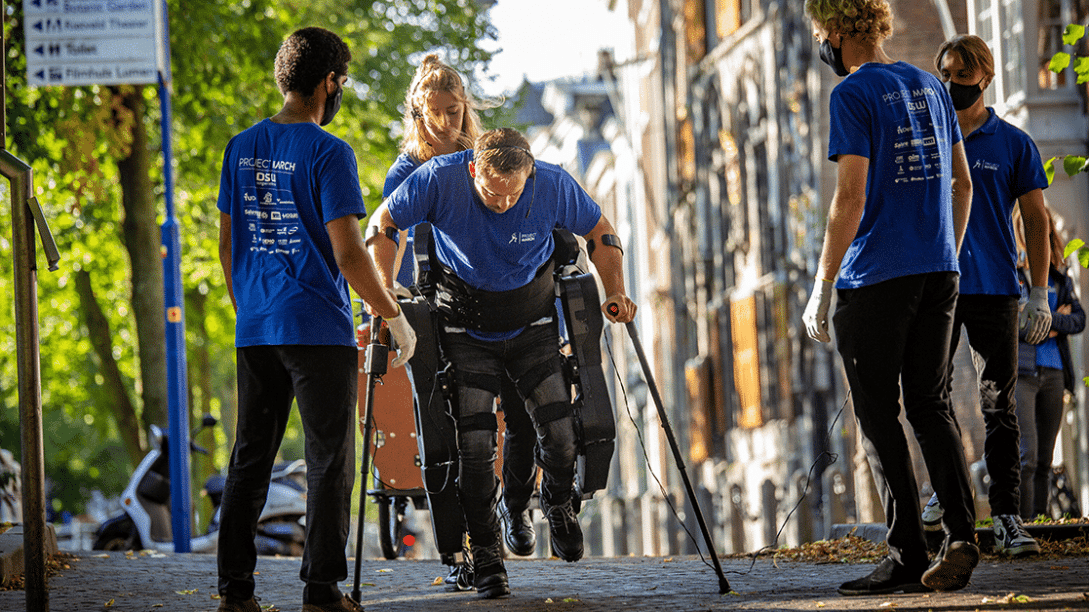
This is not a success story. We still have a long way to go. But the first steps have been taken: at the end of August Koen van Zeeland (34) walked through Delft. That is special, because since 2013 he can no longer walk. An on-the-job accident put an end to that. But Koen did not throw in the towel. He got back on his feet, and among other things he now works with the non-profit Project MARCH, formed by a team of some 26 students from TU Delft.
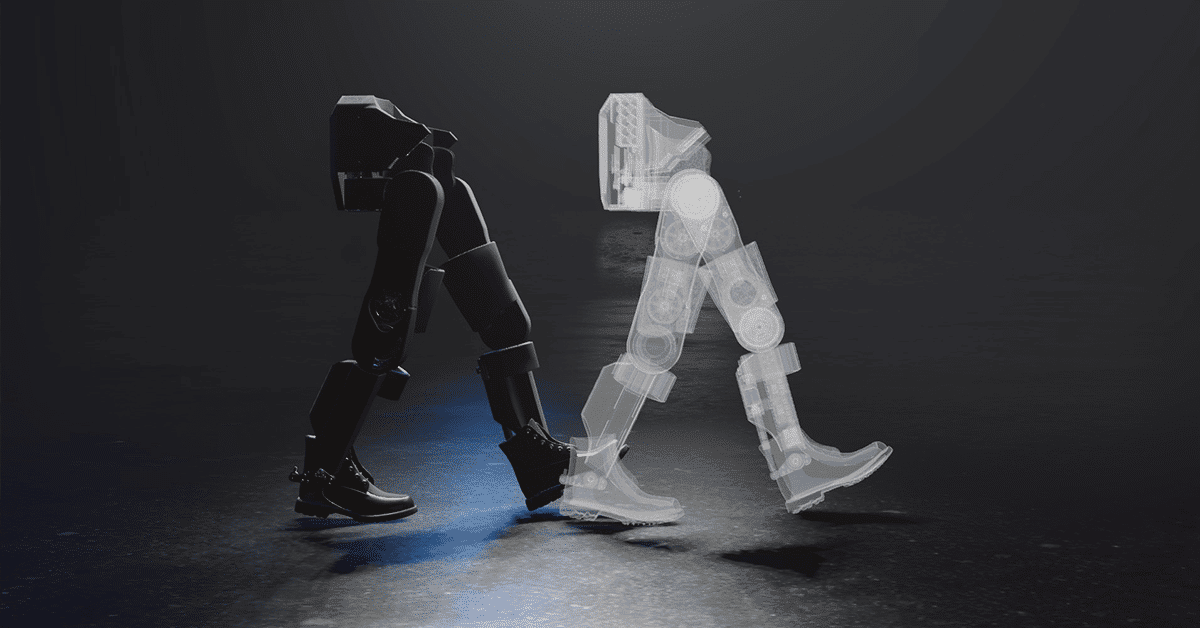 Design Presentation Project MARCH VI
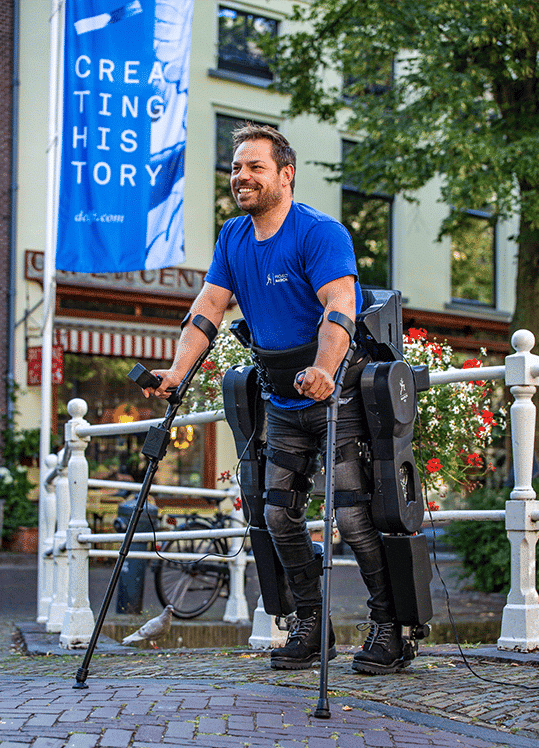 Koen walks through Delft with the exoskeleton
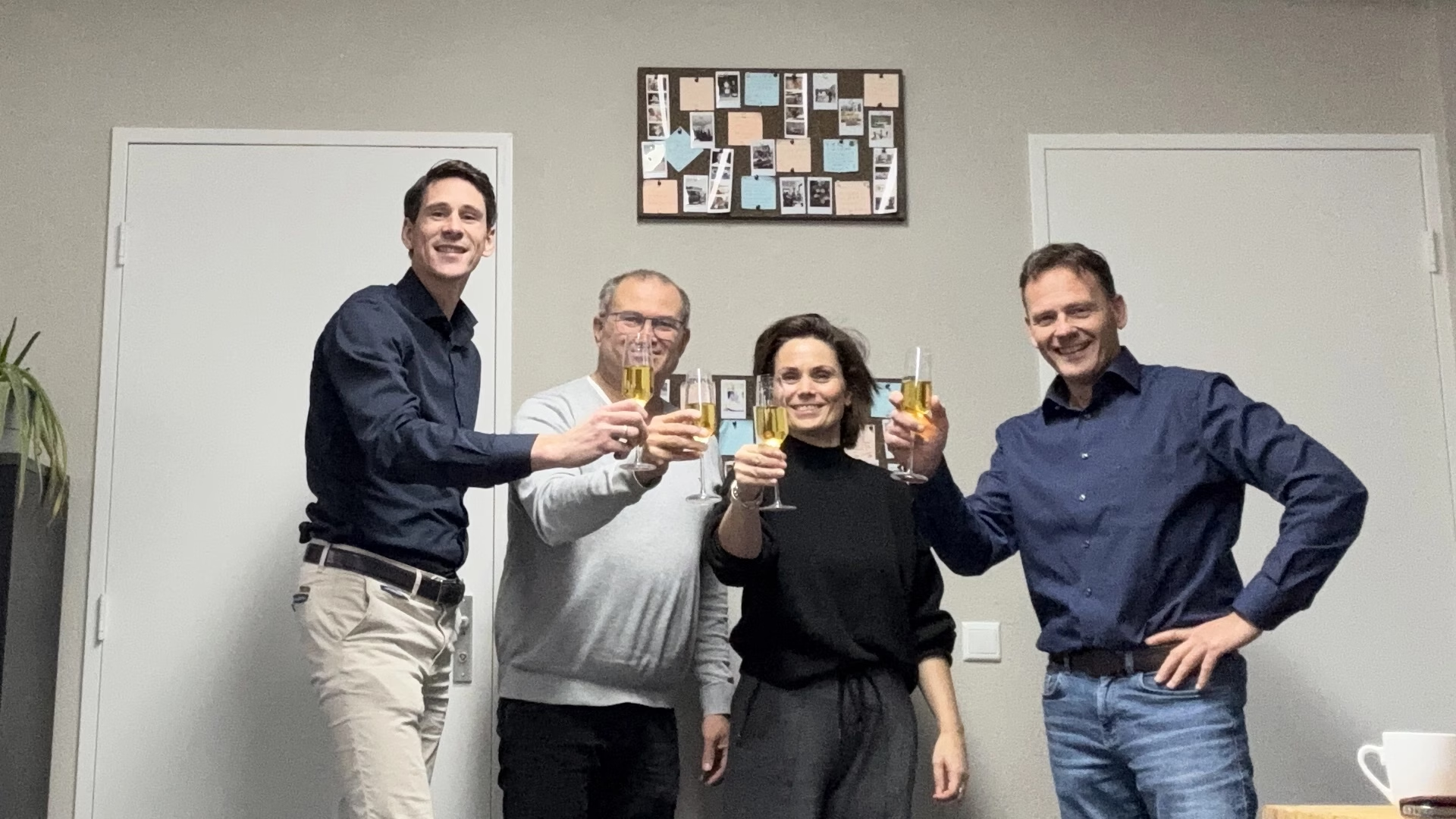
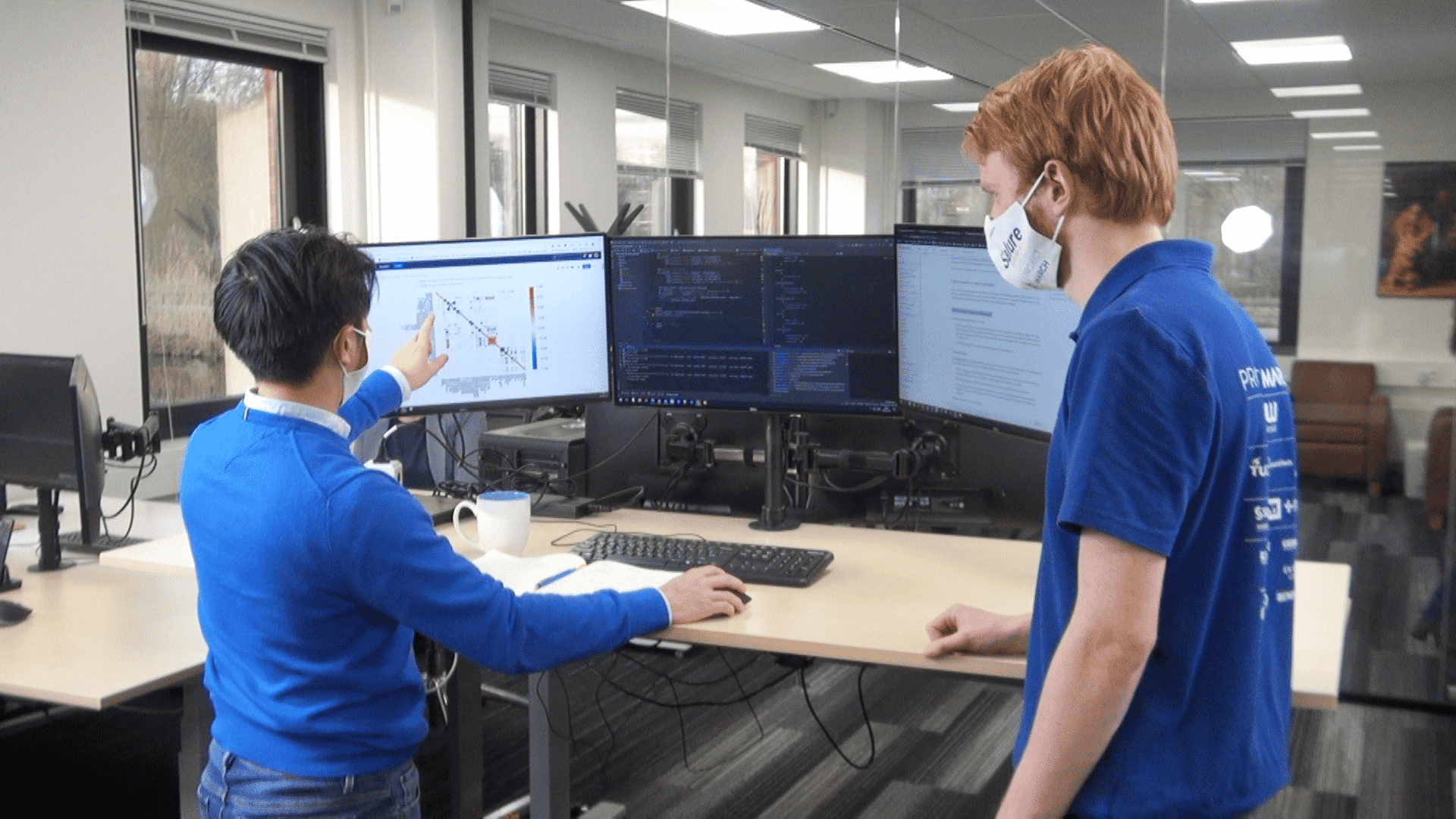 Project MARCH visiting Salure’s Data & Analytics team
Gap year
Project MARCH (motor assisted robotic chassis for humans) has existed since 2015. Every academic year, a new batch of students stop their studies for a year and devote themselves for a year to the development of a prototype exoskeleton – an external skeleton, that is – for someone with a spinal cord injury. In doing so, they always build on insights and developments from previous years.
Design Presentation Project MARCH VI
Pilot
Koen is the current pilot of Project MARCH. He put on an ever-improving motorized robotic suit last year, to test in practice. He is the most important member, the students believe. Because who better to indicate what is needed to make the exoskeleton more usable, than the user himself?Venture outside
What was special about the plans of the Project MARCH VI team – the one from last academic year – was the step outside. In previous years, students built an exoskeleton that had to aim as high as possible at the Cybathlon, an international competition for physically disabled people with bionic limbs: advanced, electronic prostheses. With these, the pilots have to complete a course with obstacles known in detail beforehand. Such as a bench to stand on, an uneven terrain to walk on and a staircase to climb up and down. The robot harness was therefore pre-programmed accordingly.Taking a stroll
Last year, Project MARCH took a different path. “The fifth team, from the previous year, had mastered these obstacles well. There was little left to innovate on that,” explained team spokeswoman Puck Noorlag. “It’s incredibly nice that someone with a spinal cord injury can walk again with a pre-programmed exoskeleton, but it doesn’t bring the use of exoskeletons closer to everyday use. That’s why, as the sixth team, we chose not to focus on a Cybathlon, but rather on making the exoskeleton dynamic.” Not a course with previously known obstacles became the challenge, but a walk. “Just” a stroll, through the city center of Delft.Cobblestones
Only, such a walk around the block is not at all normal for a robotic exoskeleton. It treads a terrain with always completely unknown obstacles. An asphalt road can turn into pavement. Bricks can give way to cobblestones. One curb is higher than the next. You encounter different kinds of bridges again and again, with steep and gentle slopes. Sometimes you suddenly find yourself in front of a staircase – one time with narrow high steps, the other time with wide and low steps. And sometimes you want to sit down, on one of the many benches along a canal.
Koen walks through Delft with the exoskeleton
Depth cameras
So the students had to develop an exoskeleton that had to be able to find solutions to occurring situations on the spot. The, as far as is known, first dynamic exoskeleton in the world. Not a detailed pre-programmed one, but one that could anticipate ever-changing circumstances. With depth cameras that read the environment three-dimensionally, to determine the walking or sitting pattern.Salure
It is exactly in this domain that Salure has a lot to offer. In order for an exoskeleton to respond (ever better) to information from its surroundings, designers must correctly collect, visualize and analyze large amounts of data from its on-board computer. Salure partner Jaco van Hengel: “That’s something we do every day: our business intelligence specialists try to recognize patterns in large quantities of data. They then use this data to automate even more processes. Normally, this is how we make payroll smarter and smarter, and help companies make better decisions. Now, with our findings, we are helping team MARCH to make the exoskeleton function ever more accurately.” Find out how Salure’s data team supports Project MARCH
Project MARCH visiting Salure’s Data & Analytics team